
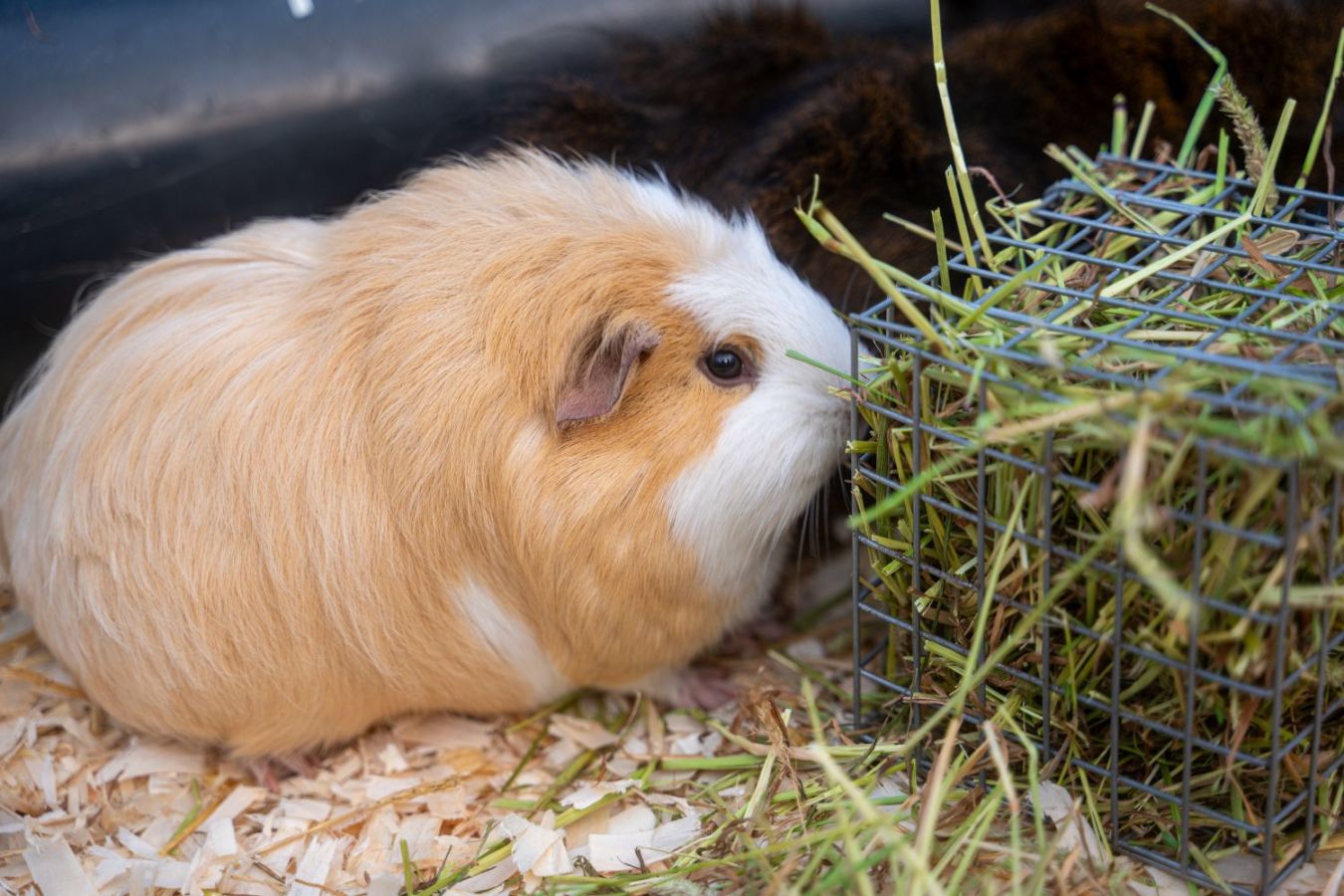
This Guinea Pig Appreciation Day, we’re taking a deep dive into some of the most common diet-related health issues in guinea pigs, and, more importantly, how to prevent them.
We caught up with our in-house vet, Dr Lucy Robson, to talk all things guinea pig nutrition. Dr Lucy explains, “Guinea pigs are very similar to rabbits as they are hindgut fermenters, and all their teeth continuously grow. They have the same requirements for a high fibre diet.”
Let’s look at the most common diet-related conditions we see in guinea pigs, and what you can do to keep your piggies happy and healthy.
Vitamin C Deficiency
Just like us humans, guinea pigs can’t produce their own vitamin C. Because of this, vitamin C deficiency is a relatively common problem.
Severe signs of vitamin C deficiency include bleeding gums and bone deformation. More common signs of mild vitamin C deficiency are arthritic changes, thought to be linked to cartilage damage caused by low vitamin C levels.
How to make sure your guinea pig is getting enough vitamin C:
- Offer vitamin C-rich vegetables regularly.
- Feed a specific guinea pig pellet, which is fortified with vitamin C.
- Add a vitamin C supplement. Guinea pigs have a surprisingly high daily requirement, so supplementing gives a good boost.
- Choose hay, toppers and forage that naturally contain good levels of vitamin C, look for ingredients like dandelion leaves or dandelion roots, parsley, rosehips and dill.
Hay with toppers such as dandelion and marigold, or forage blends like an immunity boost mix, are a great addition to any guinea pig’s diet.
Dental Disease
As Dr Lucy explains, a guinea pig’s teeth are positioned slightly differently in the mouth compared to a rabbit’s, which means dental disease can lead to a very specific problem called tongue entrapment. The cheek teeth (premolars and molars) grow diagonally in a palisade pattern, and if they become overgrown, they can pinch the tongue in the middle. This restricts the tongue’s movement and can leave your guinea pig unable to eat.
The symptoms of dental disease in guinea pigs are similar to those in rabbits, and include:
- Drooling
- Selective eating (choosing “easier” foods over hay)
- Weight loss
Often, affected guinea pigs want to eat but simply can’t.
As with rabbits, offering a variety of hay is one of the best ways to use different textures to naturally help keep those ever-growing teeth in check.
Urinary Disease
Urinary disease in guinea pigs is linked to a number of factors, including calcium levels in the diet. If your guinea pig has a history of urinary disease or bladder stones, switching to oat hay can be beneficial, as it’s naturally lower in calcium. It’s best to steer clear of alfalfa hay in these cases.
GI Stasis
Gut stasis is a common, and serious condition in guinea pigs, and should be considered if you notice a decrease in your guinea pig’s appetite and food intake. A poor diet, particularly one with an excess of pellets or muesli-style mixes, is a leading cause of gut stasis.
Hay is an essential part of a guinea pig’s diet, and good-quality hay should always be available to support healthy gut function.
From vitamin C deficiency to dental health, urinary function to gut health, providing a balanced high-fibre diet is crucial to ensuring your guinea pig is healthy and happy. Offering good quality hay with vitamin C rich vegetables and the right pellets helps to keep these common conditions at bay.
If you’re ever concerned about your guinea pig’s eating habits, weight, or general health, contact your vet for personalised advice.
16 July 2026